Om/ Aum
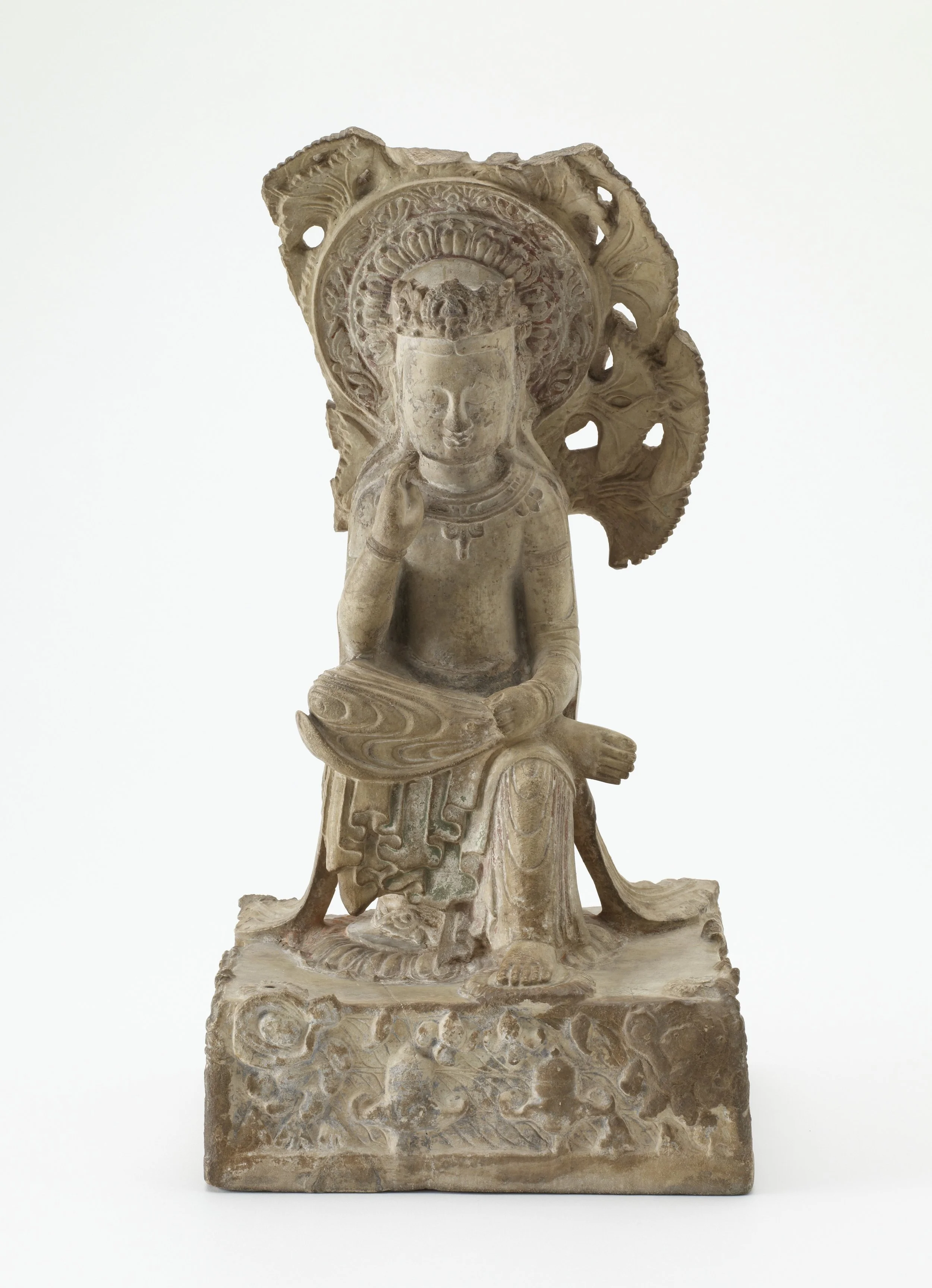
The Bodhisattva Mile (Sanskrit Maitreya), seated in "Pensive Pose" (ca. 575). Courtesy of the Smithsonian Institution.
Mantra
OM (or AUM) is considered the foundational mantra in the Vedic tradition. It isn’t an affirmation and it isn’t symbolic language. It’s sound—used to align attention and open the mind for meditation. Traditionally, it represents the full cycle of experience: waking, dreaming, deep sleep—and the awareness behind them. The syllable is described in three parts: A, U, and M. Creation, sustenance, dissolution. Beginning, middle, end. When chanted slowly, it mirrors the natural arc of breath and attention. The effect isn’t conceptual—it’s physiological. The vibration settles the nervous system and gently draws awareness inward. OM is often used at the beginning of other mantras because it clears mental noise first. It prepares the mind to receive subtler sound. In practical terms: if you’re distracted, restless, or overstimulated, OM is a direct way back to center.
